Discovering the Traditional Art of Vietnamese Water Puppetry
Water puppetry is a unique form of folk art that has existed for over 1000 years, deeply reflecting the culture, daily life, and spirit of the Vietnamese people. Originating from humble performances in rice fields to celebrate harvests, water puppetry has evolved into a recognized cultural heritage art form that captivates both domestic and international visitors.
1.All about water puppetry
1.1. What is Water Puppetry?
Water puppetry is a traditional form of Vietnamese folk theater in which wooden puppets are controlled by puppeteers performing over a water surface. The stage is typically a large pond or pool (called a “thủy đình”), where puppeteers stand behind a screen and manipulate the puppets using bamboo poles and hidden strings submerged in the water.
This art form was created as a form of spiritual and social entertainment by farmers, who would stage performances to unwind after the harvest season. Therefore, it retains a deeply rustic and authentic Vietnamese spirit.
More than just entertainment, water puppetry is a storytelling medium that conveys folk tales, legends, scenes from village life, and the cultural values of the Vietnamese people.
The water puppet show
1.2. History of Water Puppetry
Water puppetry dates back to around the 11th century in the Red River Delta, particularly in Northern Vietnam. Originally, performances took place during village festivals, temple ceremonies, Lunar New Year celebrations, or after bountiful harvests, as a way to give thanks to the gods and bring joy to the community.
During the Lý Dynasty, water puppetry was even performed for the royal court at feasts and during imperial tours.
Over time, this art form evolved and became more professional, emerging as a distinctive symbol of Vietnamese culture and being performed both domestically and internationally.
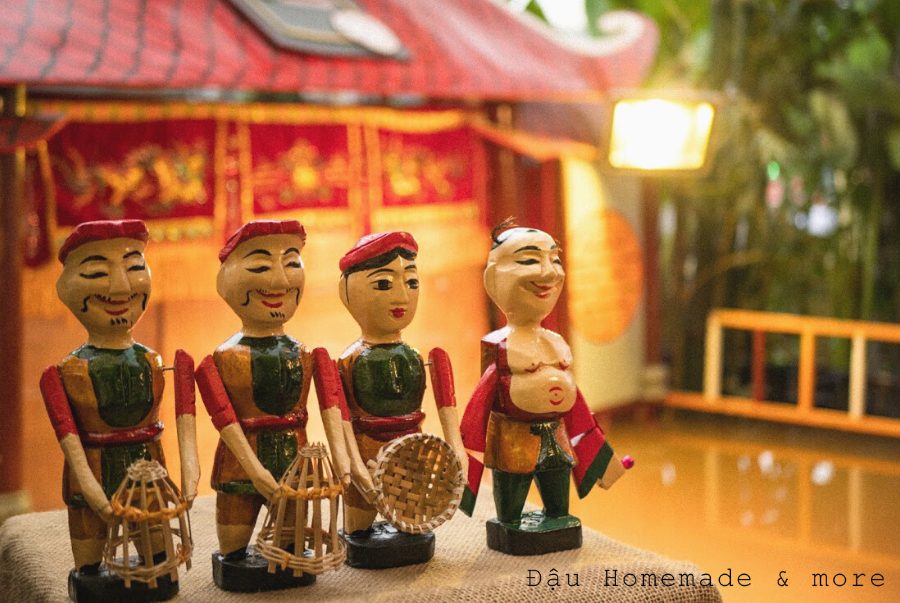
The old puppets
1.3. Cultural Significance of Water Puppetry
The importance of water puppetry lies not only in its artistic value but also in its embodiment of the Vietnamese soul, identity, and folk wisdom. The stories performed reflect authentic aspects of rural life, historical events, legends, and iconic characters such as Chú Tễu (the humorous narrator), boat races, lion dances, and more.
Water puppetry also holds spiritual significance, often representing prayers for favorable weather, a prosperous harvest, and strong community bonds.
2. Water Puppetry at Đậu Homemade
2.1. The Đậu Homemade Water Puppet Theater
In addition to offering traditional Hanoi cuisine, Đậu Homemade also creates a space for Vietnamese traditional art, featuring an in-house water puppet theater.
The theater at Đậu Homemade is a miniature version, occupying less than 12 square meters, yet it includes all the signature features like the temple-style roof and festival flags. It is also portable, allowing the performances to be brought to a variety of locations and making it easier to share this cultural art form with the public.
Children experience water puppetry
A unique aspect of the performances at Đậu Homemade is the opportunity for guests to interact with the puppeteers — who are Đậu’s staff members — and learn how to control the puppets while hearing the stories behind each performance.
2.2. Water Puppet Show Schedule at Đậu Homemade
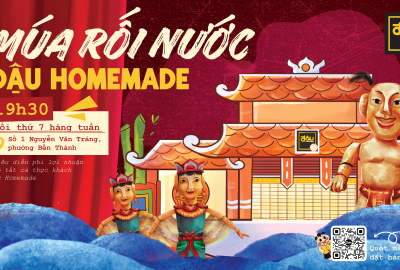
The water puppet shows at Đậu Homemade do not follow a fixed schedule. They usually take place on weekend evenings or special holidays at the branch located at No. 1 Nguyễn Văn Tráng Street, Bến Thành Ward, District 1, Ho Chi Minh City.
All performances are free of charge. Guests can also book private shows for groups of 15 people or more in advance.
Water puppet theater at No.1 Nguyen Van Trang, Ben Thanh Ward, District 1
Đậu Homemade is also ready to bring its mobile puppet theater to schools, hospitals, tourist areas, and more.
For more information, please contact: Email: marketing@dauhomemade.com Fanpage: Đậu Homemade
 Menu
Menu